
 By
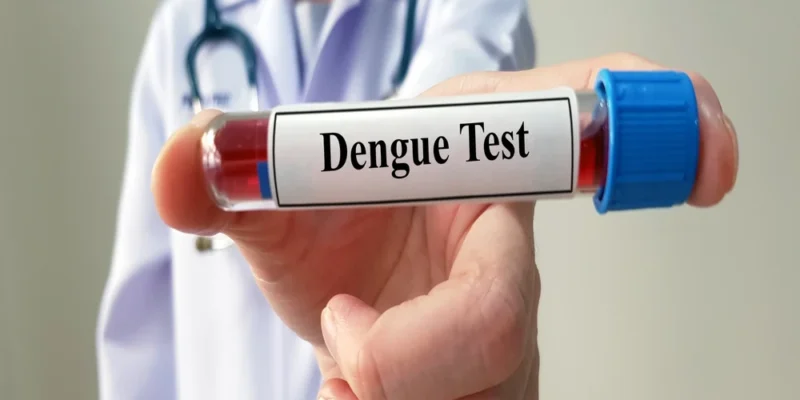
You have fever, body ache and a lab slip that says “NS1 antigen: Positive” or “Negative”. What does it actually tell you, and what should you do next? This guide explains how to read a dengue NS1 report, how it differs from the IgM and IgG antibody tests, which other numbers on the same sheet matter, and which signs mean you need a hospital rather than home rest.
What NS1 is and why it is tested first
NS1 (non-structural protein 1) is a protein released by the dengue virus into the blood during the early phase of infection. It appears within the first day of fever and usually stays detectable for about 5 to 7 days. Because it shows up before the body makes antibodies, the NS1 antigen test is the most useful early test, typically ordered on day 1 to 5 of fever.
Labs report NS1 in one of two ways:
- Rapid card test: result as Positive or Negative, often within an hour.
- ELISA: a more sensitive laboratory method, sometimes reported with an index value where values above a stated cut-off are positive.
How to read the result
| Result | What it usually means |
|---|---|
| NS1 Positive | Active dengue infection, most likely in the first week |
| NS1 Negative (day 1-5) | Dengue less likely, but a very early sample can miss it; repeat or add antibody tests if fever continues |
| NS1 Negative (after day 5) | Antigen may have cleared; IgM is the better test now |
A positive NS1 does not tell you how severe the illness will be. Many people with a positive result recover at home with fluids and rest. A negative result on day 1 or 2 also does not fully rule dengue out, which is why doctors often ask for a repeat sample or a different test after 48 hours.
NS1 vs IgM vs IgG: which test on which day
The three dengue markers rise at different times, so the right test depends on how long you have had fever.
- NS1 antigen: day 1-5 (sometimes up to day 7). Best for early confirmation.
- IgM antibody: appears from around day 4-5, peaks in the second week, and can stay positive for 2-3 months. Shows a recent infection.
- IgG antibody: appears late in a first infection and rises quickly in a second infection. Positive IgG with negative IgM often points to a past infection rather than a current one.
Common combinations:
- NS1 positive, IgM negative: early, current infection.
- NS1 positive, IgM positive: current infection, around day 5-7.
- NS1 negative, IgM positive: recent infection, probably past the first week.
- NS1 negative, IgM negative, IgG positive: likely an old infection; look for other causes of fever.
- IgM and IgG both positive early: may suggest a second (secondary) dengue infection, which carries a higher risk of complications and needs closer monitoring.
Many Bengaluru hospitals, including Cura Hospitals, offer a dengue NS1 test with IgM/IgG and a complete blood count, so all three can be interpreted in one visit.
The other numbers on the same report: platelets and haematocrit
A dengue work-up almost always includes a complete blood count (CBC). Two values matter most:
- Platelet count: normal is roughly 1.5 to 4.5 lakh per microlitre. In dengue, platelets typically fall between day 3 and day 7 and recover after the fever settles. A falling trend matters more than a single number. Doctors generally become more watchful below 1 lakh and consider admission below 50,000, or earlier if there is bleeding.
- Haematocrit (PCV): a rise of 20% or more over your baseline suggests plasma leakage, an early sign of severe dengue, even if platelets look acceptable.
Because these values change daily, most doctors advise a CBC every 24 to 48 hours during the fever phase and for two days after the fever breaks, which is when complications most often appear.
What to do after a positive result
- Drink plenty of fluids: water, ORS, coconut water, soups.
- Use paracetamol for fever and pain. Avoid aspirin, ibuprofen, diclofenac and similar painkillers, which increase bleeding risk.
- Rest, and keep a diary of temperature, fluid intake, urine output and new symptoms.
- Repeat the CBC as advised and carry all reports to every review.
- Use mosquito nets or repellent so the virus is not passed on through mosquitoes.
Warning signs that need hospital admission
The dangerous phase of dengue usually begins as the fever comes down, around day 3 to 7. Go to an emergency department immediately if you notice any of these:
- Severe or continuous abdominal pain
- Persistent vomiting, or inability to keep fluids down
- Bleeding from gums or nose, blood in vomit or stool, heavy periods
- Red or purple spots on the skin that do not fade on pressure
- Extreme tiredness, restlessness, drowsiness or confusion
- Cold, clammy hands and feet, or very little urine for 6 hours or more
- Rapid fall in platelets or a sharp rise in haematocrit on the repeat test
A detailed list of dengue red flags that call for hospital admission can help families decide quickly. Admission allows intravenous fluids, close monitoring and, rarely, platelet transfusion when there is bleeding.
Reading your report: a quick checklist
- Note the day of fever on which the sample was taken.
- Check NS1, then IgM and IgG, against the timeline above.
- Compare the platelet count and haematocrit with earlier reports.
- Note any warning signs and tell the doctor at review.
- Ask when the next blood test is due.
A dengue NS1 report is a snapshot of one day in a changing illness. Reading it alongside the fever timeline, antibody results and daily blood counts keeps a mild case from being mistaken for a safe one. Basic dengue symptom and home-care tips can guide the first few days, but any warning sign means a hospital visit the same day.
Disclaimer: This article is for general information only and is not a substitute for medical advice. Please consult a qualified doctor for the diagnosis and treatment of dengue fever.










Comments