
 By
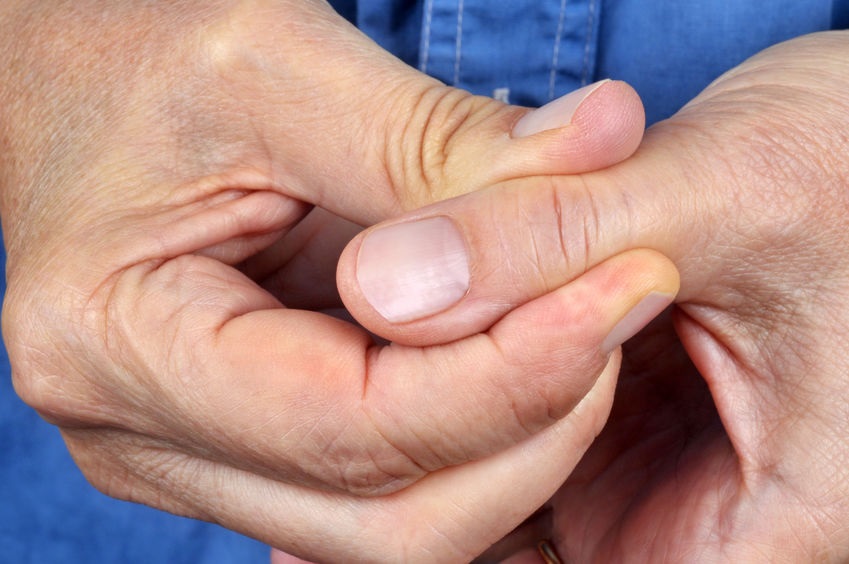
When speaking of the thumb, you may already imagine people making the ‘thumbs up’ notion in marketplace online or the time when you need to use the thumb as a signature for official documents. Thumbs may seem like just an accessory of the hand but do you know that there are actually conditions that may affect the thumb from being able to move freely? Conditions that cause the thumb to be unable to function well could be needing medicine to treat it. One of the conditions known as arthritis can affect the thumb.
Before we talk more about arthritis in the thumb, you may want to understand more about the thumb itself first as it is closely affected by the disease. Thumb is considered the first finger. It has a different shape and function from other digits, making the thumb able to move and function differently from other fingers. Thumb only has two phalanges (bones) and one joint. There are nine muscles enabling thumb movement. Primary function of the thumb is to work together or oppositely to the other fingers to manipulate objects and actions such as grasping or pinching. Thumbs play a vital role in coordinating hand movement for precise tool use.
Thumb arthritis is known as basal thumb arthritis. It is among the common arthritis affecting the hand. Arthritis in general is a condition of joint inflammation. People with thumb arthritis have a condition where the cartilage wears away, causing the bones to rub on each other. This eventually causes friction and damage to the joint. Symptoms are presented as these processes occur. In a typical healthy joint, the cartilage becomes the cushion for the bones when there is movement.
Specifically, the joint affected in thumb arthritis is the carpal-metacarpal (CMC). The CMC joint is located near the wrist and at the fleshy part of the thumb. This specific joint enables the thumb to grip things by performing pivot and pinching actions. Typically, arthritis of the thumb occurs in those aged 40 and above. Most cases of arthritis in the thumb stems from cartilage degeneration caused by osteoarthritis. Osteoarthritis itself causes the cartilage in joints to break down and slowly cause changes to the bone. On top of that, any type of trauma to the thumb can increase chances for developing arthritis in the thumb. It is also said that conditions such as lupus or rheumatoid arthritis may have had an effect on the thumb, making the joint easily to be damaged.
Symptoms that are usually the first to be noticed are pain when there are activities of gripping or pinching such as writing, opening doors or snapping fingers. Tenderness and swelling may be found at the base of the thumb. The pain itself will cause limited motion in the thumb. Prolonged use of the thumb may cause a person to have aching discomfort to the thumb. Pain may be constant as arthritis progresses and weakness or loss of motion can occur in this time. Eventually, it will cause development of bump or bony pointing over the base of the thumb or enlarged “out-of-joint appearance”. Apart from these symptoms, thumb arthritis may be associated with carpal tunnel syndrome and tenosynovitis of the wrist. This is why it is best to get checked by doctors when there are any symptoms of the thumb. This is especially true when symptoms begin to affect a person’s daily living or routine.
Diagnosis is usually made with history and physical examination of the thumb. History includes medical history that may have had affected the thumb and the characteristics of the symptoms such as severity and frequency of pain. Imaging tests are often used to check for signs of arthritis such as joint space and formation of bone spurs.
In early stage, treatment is often nonsurgical approach such as nonsteroidal anti-inflammatory drugs (NSAIDs) to treat inflammation, counterirritants such as menthol, lidocaine or capsaicin to provide relief from pain, pain relief medication such as acetaminophen and corticosteroid injection to the affected joint. Treatment at home such as wearing thumb and wrist support, braces, strengthening exercise and avoidance of placing pressure on the thumb can further ease pain and improve thumb function. Surgery is an option when nonsurgical treatment is proven to be ineffective in treating symptoms of the arthritis in the thumb. Surgery ranges from soft tissue procedures of removing part of the joint to fusing bone with joints and to removal of part of the bones known as the trapezium in advanced stages of disease.
In essence, arthritis in the thumb often occurs at the base of the thumb. Most often this arthritis is caused by osteoarthritis. Most patients are those aged 40 and above. Initial symptoms of arthritis in the thumb is the pain triggered when there is thumb movement. Treatment for the condition depends on the severity of the issue but most cases at an early stage do respond to nonsurgical approaches. Surgery is often the last resort in providing relief for patients.









Comments